|
|
|
|
|
|
|
Pendants
|
|
|
|
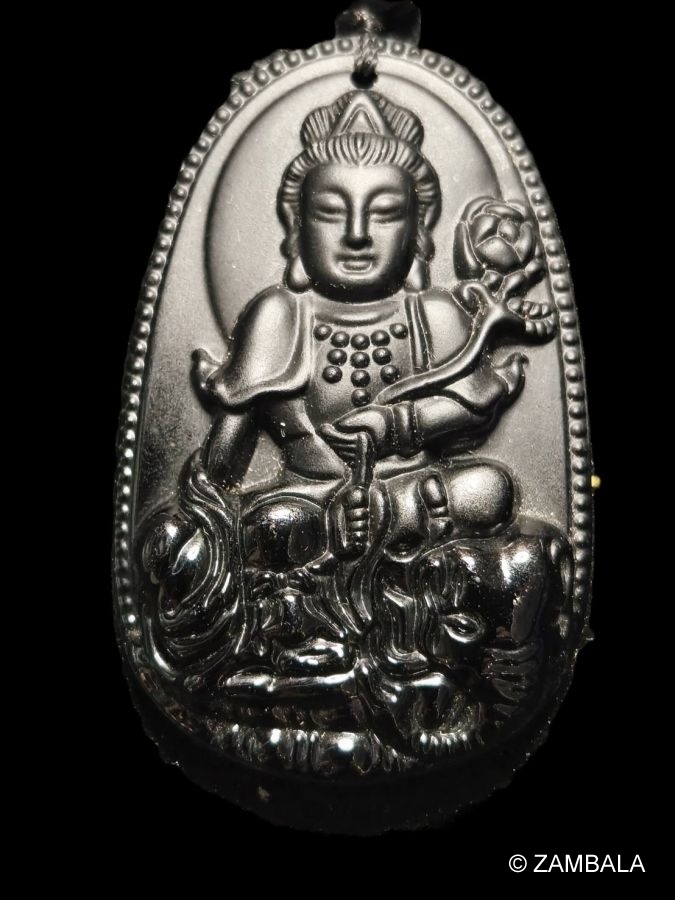
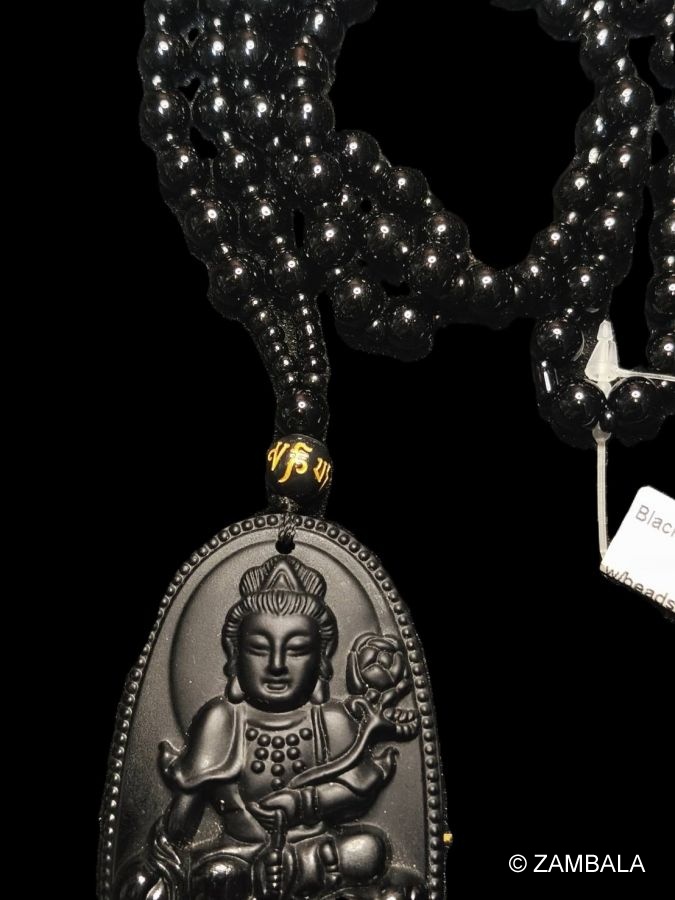
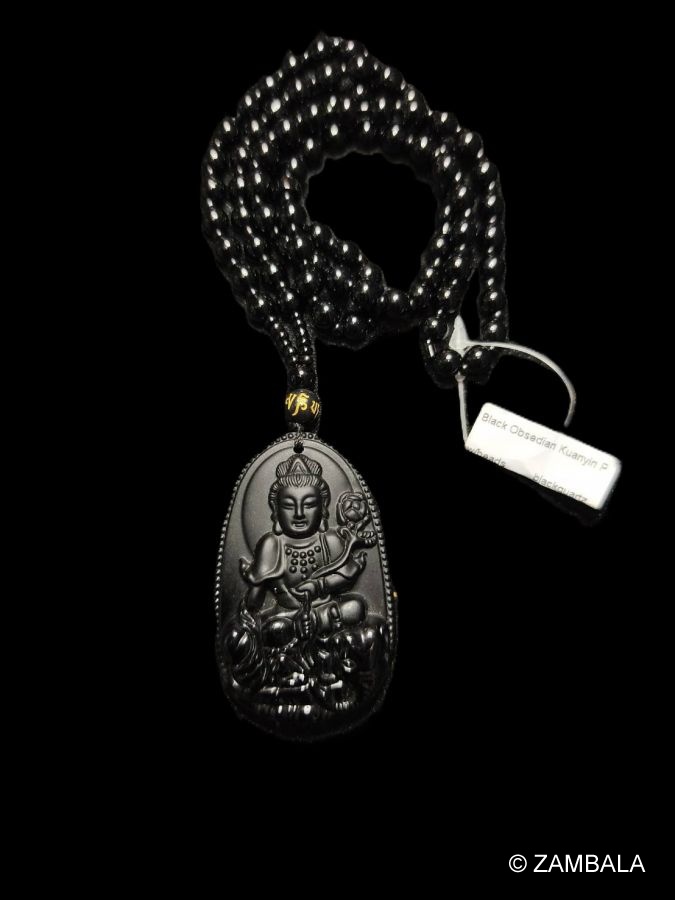
| Black Obsedian Kuanyin Pendant |
|
|
|
|
|
Sku#:2526
|
|
|
|
|
|
|
 |
|
Please contact us to verify availability. 1-626-354-6228
Email: zambalallc@gmail.com
America area customers can view on this website first.
https://FlyingMystics.org/ |
|
|
|
|
|
|
Material: Obsidian, Volcanic Rock, Sculpture, Amulet
Size: w/beads / 6.5 x 4 cm
Description: The Origin, Material Characteristics, and Significance of Obsidian Buddha Pendants
"Obsidian Buddha pendants" are not traditional Buddhist objects that have existed for hundreds or thousands of years. They are modern Buddhist ornaments that have become popular among Chinese Buddhists, Tibetan Buddhists, and the New Age spiritual market in the last 20-30 years. They are a product of mineral healing. The following fully explains their origin, usage, and actual impact on contemporary Buddhism.
I. Origin and Historical Background
1. **The Cultural Roots of Obsidian Itself**
- Obsidian is a natural volcanic glass, regarded as a powerful protective and purifying stone in many cultures throughout history and across the world.
- Native Americans (especially the Aztecs of Mexico) used obsidian to make blades and mirrors, regarding it as sacred to Tezcatlipoca (the god of smoke mirrors), possessing the power to see the truth and ward off evil.
- In Tibetan Buddhist areas (Tibet, Mongolia, Bhutan), obsidian was also used early on to make dzi beads or amulets, because its deep black color and iridescent sheen (iridescent obsidian) were believed to powerfully absorb negative energy.
2. **Buddhist Image Carvings in Obsidian are a Modern Product**
- The large-scale carving of "Buddha images such as Shakyamuni, Avalokiteshvara, Bhaisajyaguru, Amitabha, Maitreya, etc., onto obsidian" only began after 2000.
- Major production areas: Sihui, Jieyang, and Pingzhou in Guangdong, China; Mexico, the United States, and Iceland.
- The two most common and popular types of obsidian are:
- Rainbow Obsidian (also known as Rainbow Eye or Heavenly Eye): Has a distinct colored halo and is considered to have particularly strong energy.
- Gold Sand Obsidian and Silver Sand Obsidian: Contain metallic mineral inclusions that sparkle.
3. **Why the Sudden Popularity?**
- After 2000, Chinese Buddhists combined their beliefs with New Age crystal healing culture, considering obsidian an extremely powerful purifying and protective stone. By carving Buddha and Bodhisattva images onto it, it became a double-protective item, possessing both Buddhist blessings and mineral energy.
- Many Tibetan Buddhist masters (such as some Nyingma and Kagyu lamas) also began consecrating obsidian-carved Buddha pendants, causing it to quickly become popular in the Tibetan Buddhist market.
II. Usage and Folk Beliefs
Common methods of wearing and using obsidian (most of these are folk beliefs and claims about crystal healing, not orthodox Buddhist teachings):
- Wearing on the body: Hang it around the neck or put it in a pocket. It is said to ward off backstabbers, negative energy, gossip, and accidents.
- Ward off evil spirits: Often used to neutralize "Tai Sui, sharp angle evil, and piercing heart evil," placed in the office or home.
- Purification methods: Purify with saffron water, moonlight, incense, or sandalwood (avoid direct sunlight, as it will cause fading).
- Consecration: Many people have obsidian consecrated by monks or Tibetan masters, believing that this allows the combined power of Buddha and the energy of obsidian to be fully realized.
- Taboos: It is said that obsidian "absorbs too much negative energy and will crack," therefore it needs to be purified regularly; some say that women should not wear it during menstruation (folk belief).
III. Profound Impact on Buddhism (Positive and Controversial)
Positive Impacts
- Making Buddhism More Accessible to Younger Generations: Many people born in the 1990s and 2000s started practicing Buddhism and visiting temples after buying obsidian Guanyin or Maitreya statues, representing a modern channel for spreading Buddhism "through objects."
- Increasing Temple Revenue: Many well-known temples (such as Mount Putuo, Mount Emei, and Mount Jiuhua) now sell consecrated obsidian Buddha pendants, with proceeds used for temple repairs, printing scriptures, and releasing animals.
- Internationalization of Tibetan Buddhism: Rainbow obsidian Buddha amulets have introduced Tibetan Buddhism to many people in Europe and America.
Controversy and Criticism
- Commercialization and Superstition: Many traditional monks criticize this as "selling Buddhas and Bodhisattvas as amulets," overemphasizing warding off evil and attracting wealth, deviating from the Buddhist doctrine of "detachment from form and non-attachment."
- Price Speculation: A top-quality icy rainbow obsidian Guanyin pendant can sell for tens of thousands or even hundreds of thousands of RMB, drawing criticism that "crystal merchants are profiting from Buddhism." - The claim of energy is unfounded: Orthodox Buddhism only speaks of "Buddha's blessing," not that the mineral itself possesses energy. Therefore, many eminent monks (such as Master Hsing Yun and Master Chin Kung) have publicly stated, "Whether you wear it or not doesn't matter; what's important is whether your heart is sincerely reciting the Buddha's name."
In summary, obsidian Buddha pendants are essentially a product of "modern crystal culture + Buddhist totem," not an ancient traditional Buddhist implement. Its greatest significance in the contemporary era is lowering the barrier for young people to engage with Buddhism, allowing many to start by "wearing an obsidian Buddha amulet," eventually entering Buddhist temples and beginning to chant mantras and recite Buddha's name. Although criticized by traditionalists as commercialization, objectively speaking, it is indeed a microcosm of the "integration into daily life, ornamentation, and youthfulness" of Buddhism in the 21st century.
If you really want to acquire one, it is recommended that:
1. Find a reputable temple or a shop that performs a consecration ceremony.
2. Treat it with reverence, as a "reminder to recite Buddha's name," not simply a tool for warding off evil and attracting wealth.
Only in this way can one truly receive the blessings of Buddhas and Bodhisattvas, and not just find psychological comfort in the minerals.
|
|
|
 |
|
|
|